
Most U.S. merchants who offer buy now, pay later (BNPL) pay the provider a percentage of each order plus, in many cases, a fixed per-transaction fee. Published figures put that percentage well above card processing, commonly in the mid single digits. The consumer typically pays nothing extra on a standard pay-in-4 plan. The question is whether the extra sales, larger baskets and wider customer reach outweigh the extra cost on your margins.
This guide breaks down the fee structure, shows worked examples, explains what drives your rate, and gives you a framework for deciding whether the fee is worth paying.
TL;DR
- BNPL merchant fees are typically 5 to 8 percent of the order, against 2 to 3 percent for credit card providers, according to a Federal Reserve FEDS Note from June 2026.
- Most pricing is a merchant discount rate (a percentage) plus a fixed fee per transaction, so small orders cost proportionally more.
- Your rate depends on order value, industry, volume and the financing term, so negotiate on those levers rather than accepting list pricing.
- Judge BNPL on net margin: incremental sales, average order value and return behavior, not on the fee alone.
- Structure matters: a multi-lender or single-lender program built around your customer mix can change both approval rates and your effective cost.
Table of Contents
- How BNPL merchant fees work
- What U.S. merchants typically pay
- Worked examples: what the fee does to your margin
- Other charges to look for in your agreement
- What drives your rate
- Where BNPL providers get their revenue
- Can you pass the fee on to customers?
- Is the fee worth it? A decision framework
- A note on ticket size and category
- Perspective: why structure matters as much as the headline rate
- How to negotiate and lower your effective cost
- Offer financing that fits your customers
- FAQ
- Sources
How BNPL merchant fees work
When a shopper chooses BNPL at checkout, the provider approves the purchase, pays you the order amount up front and collects installments from the customer. The Federal Reserve describes the pay-in-4 flow this way: on approval, the provider charges the first payment and remits to the retailer the purchase price net of applicable merchant fees, while the customer pays the remaining installments to the provider at two-week intervals.
That structure has two consequences for your books:
- You are paid the net amount, not the gross. The fee is deducted from the payout, so your deposit is smaller than the ticket price.
- The provider carries the repayment risk. Payment Review notes that Affirm, for example, pays the merchant in full up front less its fee and takes on repayment risk, which is the core value of a non-recourse arrangement.
The two parts of the fee
Most BNPL pricing has two components:
- Merchant discount rate (MDR): a percentage of the total order. At a 5% MDR, a $100 item costs you $5.
- Fixed per-transaction fee: a flat amount, commonly in the range of 30 to 49 cents on mainstream processors.
The fixed part is easy to overlook. It barely registers on a $500 order, but it is a meaningful share of a $40 order.
What U.S. merchants typically pay
The range you see depends on who is measuring and when. Here is how the main published figures line up.
| Source | BNPL merchant cost | Card comparison |
|---|---|---|
| Federal Reserve FEDS Note, June 2026 | 5 to 8 percent | 2 to 3 percent |
| Kansas City Fed, 2021 | 1.5 to 7 percent of purchase value | 1 to 3 percent |
| Motley Fool, January 2026 | 1.5 to 7.0 percent | 1.1 to 3.5 percent for credit; about 0.73 percent average for debit |
| NPR, 2022 | 4 to 9.5 percent | 2 to 4 percent |
The ranges overlap but do not match, because providers price differently by merchant category, volume and program type. Treat any published number as a starting point for your own quote, not as the price you will receive.
Provider list rates through one processor
Payment Review (September 2026) reports the U.S. BNPL rates that Stripe lists, which give a concrete picture of standard pricing through a mainstream processor:
- Affirm: 6% + $0.30 standard, 7.99% + $0.30 enhanced
- Cash App Afterpay: 6% + $0.30
- Klarna: 5.99% + $0.30
- Sunbit: 6% + $0.30
- Zip pay-in-4 with customer fee: 4.5% + $0.30
For comparison, the same report cites Stripe’s domestic card rate at 2.9% + $0.30. You can read the full breakdown in Payment Review’s 2026 analysis of BNPL merchant costs.
Worked examples: what the fee does to your margin
Percentages hide the real effect on small tickets. Using the Stripe-listed rates above:
- $100 order: a BNPL sale at 6% + $0.30 costs $6.30, against $3.20 for a card sale. Payment Review puts these exact figures in its comparison.
- $40 order: the fixed fee dominates, so BNPL costs $2.70 against $1.46 for a card sale, again per the same Payment Review comparison.
- $250 order (our own arithmetic): at 6% + $0.30, the fee is $15.30, about 6.1% of the ticket.
Now translate that into margin. If a $250 item carries a 40% gross margin ($100), a $15.30 fee takes about 15% of that gross profit. If BNPL turns a lost sale into a completed one, you net about $84.70 on an order you would otherwise not have had. If it only shifts a customer who would have paid by card anyway, you have given up roughly $9 to $12 for nothing. That difference is the whole BNPL decision.
Other charges to look for in your agreement
The percentage and the fixed fee are the main costs, but read the full agreement for anything else. Depending on the provider and program, ask about:
- Setup, integration or monthly platform fees. Some programs charge none; others, particularly tiered or legacy plans, add recurring charges.
- Enhanced or promotional financing pricing. Longer terms or 0% APR promotions for the customer often carry a higher merchant rate. Affirm’s 7.99% enhanced rate in the list above is an example of that tiering.
- Refund and chargeback treatment. Confirm whether the fee is returned when a customer returns an item, and how disputes are handled.
- Settlement timing. Most providers settle in one to three business days, and the Motley Fool cites 1 to 2 business days as common. Slower settlement has a cash flow cost of its own.
- Reserve or holdback terms. Particularly relevant for higher-ticket or higher-risk categories.
Our own guide to customer financing fees and what merchants pay goes deeper on how these line items appear on a statement.
What drives your rate
No two merchants pay the same number. The factors that most often move pricing are:
- Average order value (AOV). Low-ticket merchants usually pay more as a percentage because the fixed fee is a larger share, while higher-ticket merchants have more room to negotiate.
- Industry and risk profile. Healthcare, automotive repair, home improvement, furniture and jewelry each have different default and return patterns.
- Transaction volume. Higher volume gives you leverage to negotiate a lower MDR.
- Financing term. Longer installment terms generally cost the provider more to fund, and the merchant fee reflects that.
- Credit mix of your customers. Programs that approve a wider range of credit profiles carry different risk economics than prime-only products.
Because published figures on these factors vary by source, bring your own numbers (AOV, monthly volume, category, return rate) to any provider conversation and ask for a quote built on them.
Where BNPL providers get their revenue
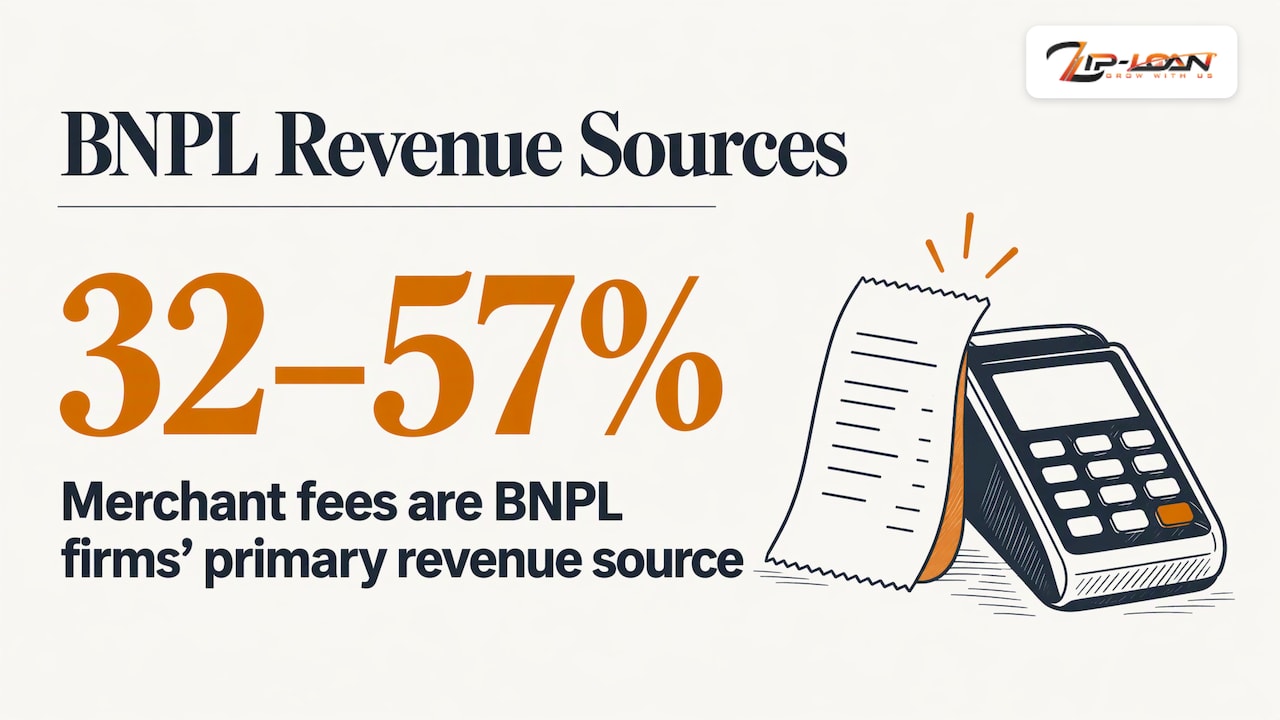
Understanding the provider’s economics helps you negotiate. A Congressional Research Service report (R48858, February 2026) states that merchant fees are the primary revenue source for BNPL firms, making up between 32% and 57% of revenue, with the rest coming from consumer interest on longer installment products, late fees, advertising and subscriptions. The same report notes that these transaction-level fees are often higher than what card networks charge merchants.
The takeaway for you: the provider earns its return from a mix of sources, so the merchant fee is not the only lever it has. Programs that are funded partly by lender interest income or customer-side pricing can sometimes offer lower merchant rates. That is a conversation worth having.
Can you pass the fee on to customers?
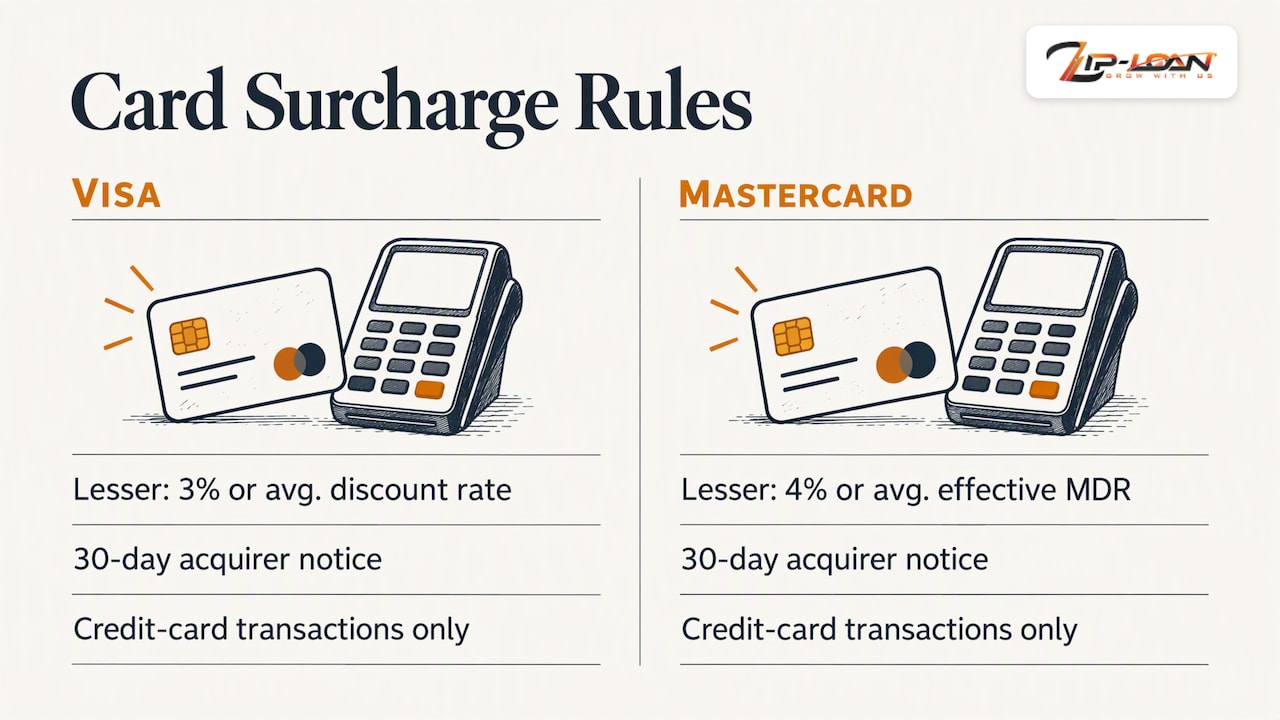
Many merchants ask whether they can add a BNPL surcharge. Surcharge rules are written mainly around credit cards, and the card networks set their own limits. According to Goodwin Law, Visa limits credit card surcharges to the lesser of 3% or the merchant’s average discount rate, and Mastercard to the lesser of 4% or the merchant’s average effective MDR. Merchants must also notify their acquirer at least 30 days before they begin surcharging, and surcharges apply to credit card transactions only.
Two practical points follow. First, those network rules do not give you a blueprint for a separate BNPL surcharge, and your agreement with each BNPL provider may have its own terms on pricing differences at checkout, so read it before adding any fee. Second, state law varies on card surcharging, so speak with your attorney or acquirer before changing checkout pricing. For most merchants, the cleaner approach is to build the fee into pricing strategy and treat BNPL as a cost of conversion.
Is the fee worth it? A decision framework
The Kansas City Fed’s research makes a balanced point: BNPL benefits many merchants, but not every merchant will find it optimal, and it comes at a premium. It suggests asking whether BNPL fits what you sell and whether a minimum transaction value is needed to justify offering it.
Use these questions to build your own answer:
- What is your incremental lift? Compare conversion and average order value for BNPL users against everyone else over a defined period. Only the sales you would not have made otherwise justify the fee.
- What is your blended cost? Track BNPL fees as their own ledger line rather than burying them in processing expenses, so you can see the true effect on margin. A bookkeeper can help you set this up, and a look at how a custom B2B marketplace platform handles payment flows shows how much checkout design shapes the economics.
- What happens after the sale? A June 2026 study from Repeat, reported by D2C Times, found first-time BNPL buyers returned products at a rate 19% higher than buyers who paid in full and reordered 14% lower over the next 90 days. The same report puts BNPL at 38% of U.S. online transactions in Q1 2026, up from 29% in Q1 2024. Returns and repeat purchase belong in your calculation.
- Do you have a ticket-size floor? If most of your orders are under $50, the fixed fee may be better offset by setting a minimum for financing eligibility.
- Who is being declined? If your current option only serves prime customers, you may be leaving sales behind that a broader program would capture.
A note on ticket size and category
BNPL economics look very different for a $35 accessory than for a $3,500 dental treatment plan or a $1,800 transmission repair. At higher tickets, the question shifts from “can I absorb this fee” to “can I afford to lose this job.” Many service categories already have customers abandoning projects because they cannot pay at once. For these merchants, financing is closer to a conversion tool than a payment method. Our guides to auto repair payment plans and home improvement financing walk through those use cases.
Perspective: why structure matters as much as the headline rate
We talk to merchants every week who start with one question: what is the lowest rate? It is a fair question, but it is rarely the one that decides profitability.
A rate only helps you if the customer is approved. A single-lender program that declines a large share of applicants gives you a low fee on sales you never complete. That is why we built ZipLoan around financing for all credit types, with single-lender and multi-lender options, so your application flow can route a shopper to an approval rather than ending the conversation at a decline.
The second factor is fit. Installment loans, lease options and private label credit serve different customers and different tickets. A customer who does not qualify for a loan may qualify for a lease, and a repeat customer may be better served by a private label card. Matching the product to the customer protects both your conversion rate and your margin.
Third, integration. Financing that lives inside your POS or ecommerce checkout, with a streamlined application and a payment program tailored to your category, reduces abandonment, and abandonment is the hidden cost most fee comparisons leave out.
Our advice: ask every provider for pricing built on your own average order value and volume, then measure approvals, conversion and returns together. The program that wins on net revenue per visitor is usually the right one.
Joe
How to negotiate and lower your effective cost
You cannot control the market, but you can control how you approach it:
- Bring data. Share your AOV, monthly volume, category and return rate. Providers price what they can measure.
- Ask for tiered pricing. If your volume grows, the rate should come down. Ask for the thresholds in writing.
- Compare structures, not just rates. A multi-lender platform lets several funding sources compete for your customer’s application, which can improve approval rates. Our overview of multi-lender financing options explains how the waterfall works.
- Match the product to the ticket. Use installment loans for mid and high tickets, leases where credit is a barrier, and short pay-in-4 plans where they fit your price points. Our comparison of installment loans vs. leases can help you choose.
- Review quarterly. Fees, approval rates and customer behavior change. Re-run your numbers on a schedule instead of once at signup.
Offer financing that fits your customers
If you want financing that covers more of your customers without forcing you to manage several lender relationships, ZipLoan gives retailers and service providers a platform to offer third-party consumer financing at checkout. It supports installment loans, lease options, no credit check financing and private label credit, integrates with POS and ecommerce systems, and offers custom payment programs for sectors such as automotive, healthcare, home improvement, furniture and jewelry.
See how it works on our page on easy financing for all credit types, or browse the payment plans you can offer customers to map options to your business.
FAQ
What is a typical BNPL fee for merchants?
The Federal Reserve cites BNPL merchant fees of 5 to 8 percent, against 2 to 3 percent for credit card providers. Other published ranges run from 1.5 to 7 percent. Many providers add a fixed fee of roughly 30 to 49 cents per transaction.
Does the customer or the merchant pay the BNPL fee?
On a standard pay-in-4 plan, the merchant pays the fee, which is deducted from the payout. The customer repays the purchase price in installments. Longer installment products may carry interest for the customer, which is a separate charge.
How do BNPL providers make money?
Merchant fees are the main source. A Congressional Research Service report puts them at 32% to 57% of BNPL firm revenue. The rest comes from consumer interest on longer plans, late fees, advertising and subscriptions.
Why is BNPL more expensive than card processing?
The provider pays you up front and takes on the repayment risk, then also funds the installment plan. Card networks price a payment, while BNPL pricing also covers credit risk and funding, so the fee is typically higher.
How should I track BNPL fees in my accounting?
Record them on their own line, separate from card processing, so you can compare net revenue and margin by payment method. Review the line each quarter against BNPL-driven sales and return rates.
Sources
- The Fed: “Buy Now, Pay Later” Beyond “Pay in 4” (FEDS Notes, June 2026)
- Payment Review: What buy now, pay later costs merchants in 2026
- Kansas City Fed: The Appeal and Proliferation of Buy Now, Pay Later
- The Motley Fool: Payment Processing Fees: Stablecoins, Cards and BNPL
- NPR: Who actually pays with buy now, pay later companies like Klarna and Affirm
- Congressional Research Service: Buy Now, Pay Later: Policy Issues and Options for Congress
- Goodwin Law: Want to Have Customers Cover Payment Processing Fees?
Recommended
- BNPL Trends 2026: What They Mean for Merchants
- Customer Financing Fees: What Merchants Pay and Why
- Anti-Fraud BNPL: A Merchant’s Guide to Prevention
- Buy Now Pay Later for Business: 2026 Merchant Growth Guide
Disclaimer: This article is provided by Zip Loan (Touch N Buy LLC d/b/a Zip Loan) for general informational and educational purposes only and does not constitute financial, legal, or professional advice. While we strive for accuracy, information may be incomplete, outdated, or subject to change without notice. Financing programs, rates, terms, and approvals vary by lender and applicant and are not guaranteed. Zip Loan makes no warranties regarding the information provided and, to the fullest ext